
Category: PROJECT
-
Publication and usage of research results
The copy of all raw data and information are shared among collaborators, and collaborators are part of publications arising from this work. The research results will be published in Japanese- and English-language journals. English-language papers and reports will be shared with researchers in various countries for exchange of information and will be distributed to research collaborators so that they may be useful. In addition, a booklet on phylogenetic classification translated into Pidgin English will be distributed to the villages.
-
Research methods
This study will use phylogenetic analysis by a DNA profiling approach focusing on the genetic characteristics of rice and bananas, as well as field interviews conducted in rural areas, and various literature sources such as reports from the colonial era. We intend to compare the species/cultivars selected by local farmers in several regions genetically and to construct the historical relationships among those places.
In regard to rice, AA genome species will be typed for nuclear and chloroplast DNA using DNA markers described in s previous study [Sotowa et al. 2013, Molecular relationships between Australian annual wild rice, Oryza meridionalis, and two related perennial forms, Rice 26: 1-18]. Non-AA genome species will be genomic discriminated by primers for genome identification proposed by Zhang [Zhang et al. 2021, DNA barcoding of Oryza: conventional, specific, and super barcodes. Plant Mol Biol 105(3):215-228] and Takahashi [Takahashi et al. 2008, Evolutionary analysis of two plastid DNA sequences in cultivated and wild species of Oryza, Breeding Science 58: 225-23], Kajiya-Kanegae has published genome information on a total of 217 short reads of 19 Oryza species including O. rufipogon, O. meridionalis, O. minuta, O. officinalis, O. ridleyi, O. longiglumis, etc [Kajiya-Kanegae H, et al. 2021, OryzaGenome2.1: Database of Diverse Genotypes in Wild Oryza Species. Rice. 14-24]. This information was used in Zhang et al., and we will use this information to examine the validity of the taxonomy proposed by Zhang et al.
In regard to bananas, The RAD-Seq method [Baird, Nathan A., et al. 2008, Rapid SNP discovery and genetic mapping using sequenced RAD markers, PLOS ONE 3.10 (2008): e3376] performed using a next-generation sequencer, will be applied for DNA profiling. This method first fragments genomic DNA using an arbitrary restriction enzyme and then sequences only the flanking regions of the restriction site. Therefore, it is suitable for massive data analyses, as in our project, because the minimum required data size per sample can be obtained while also controlling cost. Genetic distances between cultivars will be calculated by polymorphic frequencies acquired from different sequence regions. Ultimately, a phylogenetic tree will be constructed from the pairwise genetic distance matrix.
The classification of wild rice in the world based on phenotype and genotype will be made available and shared through Oryzabase (Integrated Rice Science Database), operated by National Bio-Resource Project of Japan. The classification of banana cultivars in the world based on phenotype and genotype will be made available and shared through the Musa Germplasm Information System (MGIS), operated by Bioversity. -
Subject of Research
Field research will be conducted in villages around NARI branches (Bubia, Laloki, or Aiyura) and, as needed, in areas such as Madang, ENB or WNB.
The reasons for focusing on rice and bananas among the many genetic resources in PNG are as follows. If other valuable genetic resources are discovered during the survey, they will be added to the analysis.
In regard to rice, seven species of rice are known on New Guinea Island. Of these, Oryza longiglumis and Oryza schlechteri are known only from New Guinea. The IUCN report (https://www.iucn.org/news/species/201712/unsustainable-food-systems-threaten-wild-crop-and-dolphin-species— According to iucn-red-list), O. schlechteri were evaluated as endngered. The conservation of genetic resources of Oryza species in New Guinea is an urgent issue.
In terms of the number of species per area, New Guinea has the largest number of species in the world. Two species with the same AA genome as the Asian cultivated rice Oryza sativa are distributed in New Guinea, and this area is notable for the differentiation of the two species. In addition, wild rice species other than the AA genome, namely O. officinalis with the CC genome, O. minuta with the BBCC genome, O. ridleyi and O. longiglumis with the HHJJ genome, and O. schlchteri with the HHKK genome are distributed in New Guinea. Thus, PNG is a very important subject region for studying the evolution of the genus Oryza.
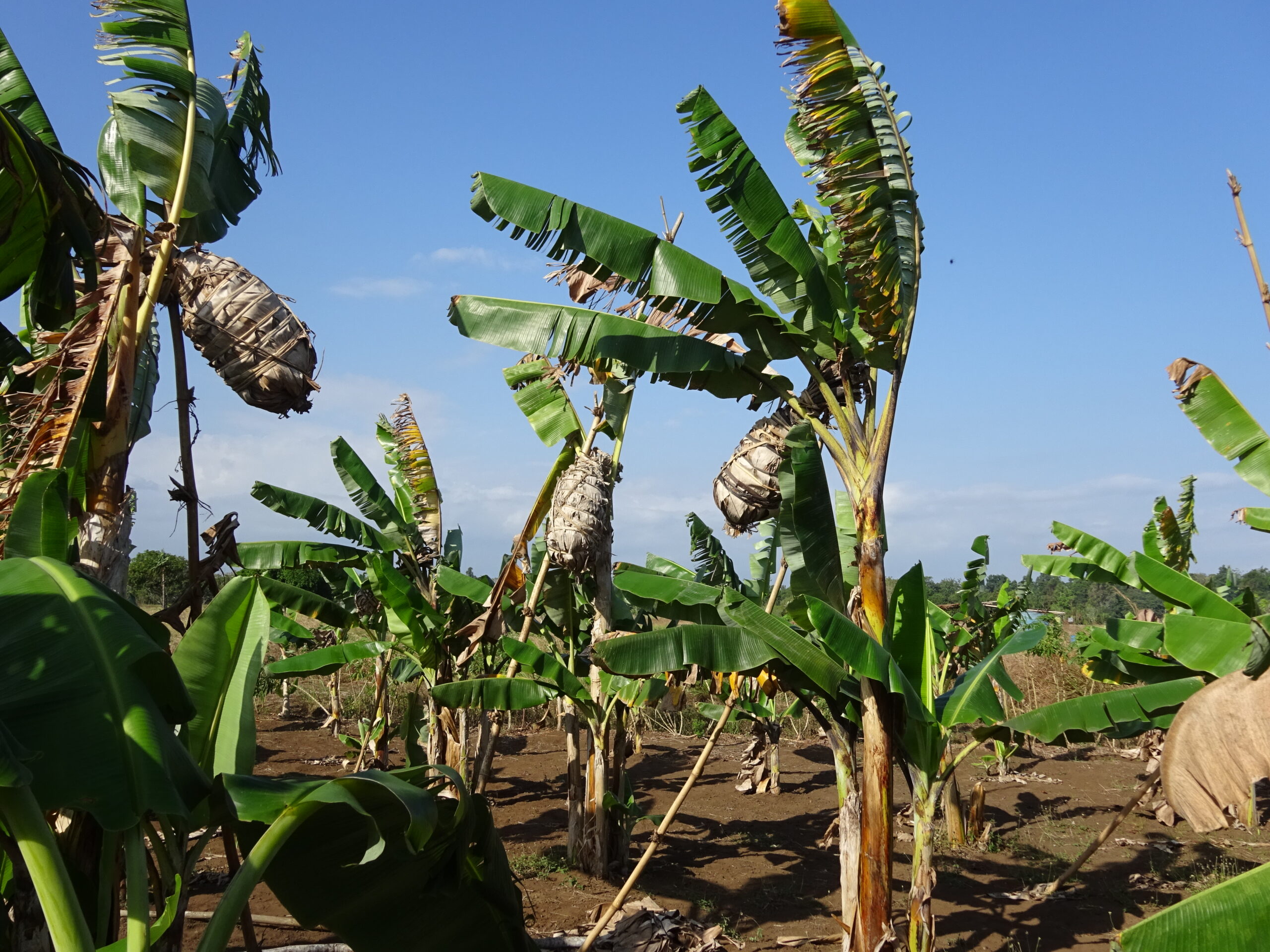
In regard to bananas, Bananas are estimated to have been domesticated between New Guinea and the Malay Peninsula, where the earliest evidence is found at Kuk Swamp in PNG [Perrier, X. et al. (2011) Multidisciplinary perspectives on banana (Musa spp.) domestication. PNAS 108(28): 11311–11318]. In addition, bananas are still one of the staple foods in PNG. However, little is known about the similarity/diversity of banana species/cultivars among linguistic groups within PNG, which is estimated to have over 700 languages.
Bananas are thought to have been first cultivated in the Asia-Oceania region including PNG, spread to tropical and subtropical regions of the world. Comparison of PNG species/cultivars with germplasm collections of other countries can reveal agricultural dispersal and human migrations. Then it is an urgent issue to establish the rights of PNG farmers who have sustained species/cultivars to their genetic resources by identifying origin of bananas of PNG.
Since the signing of the Nagoya Protocol, there has been an international call for consistent implementation of fair access to genetic resources and benefit sharing. Whether domesticated or not, the crops maintained by PNG farmers and their environment are undoubtedly important as genetic resources. Focusing on rice and bananas, the theme of this study is to determine their genetic diversity and to identify which are native and which are non-native cultivars. -
Purpose
The purpose of this study is to investigate the genealogy of species and cultivars of rice and bananas in Papua New Guinea (PNG), mainly using DNA profiling methods. PNG is a region rich in unique and diverse biological resources, but the flora and fauna which constitute its human-environment system have not been well studied by native researchers due to budget limitations. As a result, there is a large gap between global academia and PNG farmers in utilization and conservation of genetic resources. This study aims to contribute to the sustainable use of genetic resources by the PNG farmers by sharing the methods and results of phylogenetic analysis between PNG and Japanese researchers.
Field surveys, mainly sample collection, will be conducted jointly by the Japanese and PNG teams at various locations in PNG. We intend to compare the species/cultivars selected by local farmers in several regions genetically and to construct the historical relationships among those places. Then, this study will use phylogenetic analysis by a DNA profiling approach focusing on the genetic characteristics of rice and bananas. Analysis is conducted using methods and items provided by the Japanese team, and PNG researchers will be invited for technology transfer.