This study will use phylogenetic analysis by a DNA profiling approach focusing on the genetic characteristics of rice and bananas, as well as field interviews conducted in rural areas, and various literature sources such as reports from the colonial era. We intend to compare the species/cultivars selected by local farmers in several regions genetically and to construct the historical relationships among those places.
In regard to rice, AA genome species will be typed for nuclear and chloroplast DNA using DNA markers described in s previous study [Sotowa et al. 2013, Molecular relationships between Australian annual wild rice, Oryza meridionalis, and two related perennial forms, Rice 26: 1-18]. Non-AA genome species will be genomic discriminated by primers for genome identification proposed by Zhang [Zhang et al. 2021, DNA barcoding of Oryza: conventional, specific, and super barcodes. Plant Mol Biol 105(3):215-228] and Takahashi [Takahashi et al. 2008, Evolutionary analysis of two plastid DNA sequences in cultivated and wild species of Oryza, Breeding Science 58: 225-23], Kajiya-Kanegae has published genome information on a total of 217 short reads of 19 Oryza species including O. rufipogon, O. meridionalis, O. minuta, O. officinalis, O. ridleyi, O. longiglumis, etc [Kajiya-Kanegae H, et al. 2021, OryzaGenome2.1: Database of Diverse Genotypes in Wild Oryza Species. Rice. 14-24]. This information was used in Zhang et al., and we will use this information to examine the validity of the taxonomy proposed by Zhang et al.
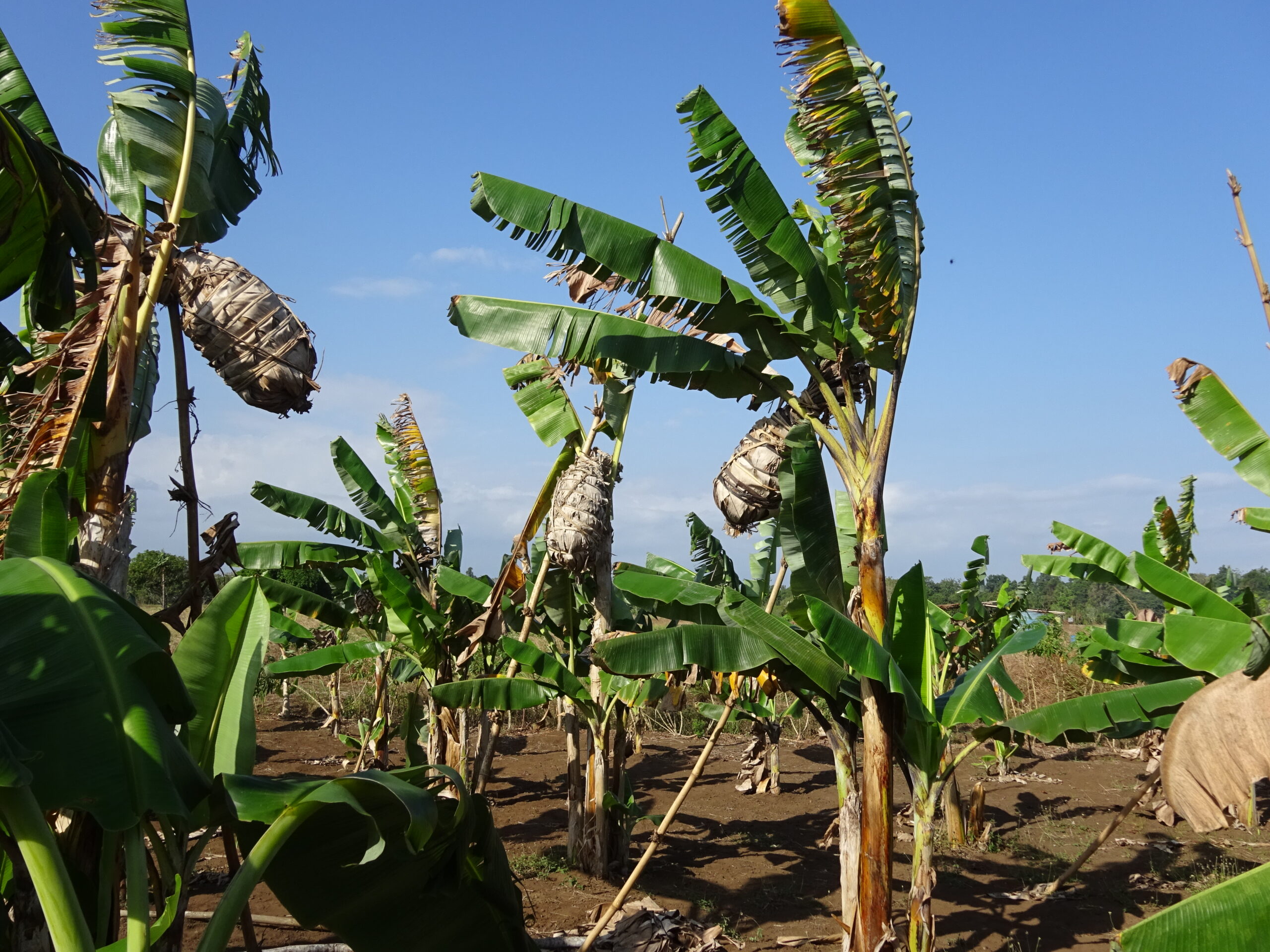
In regard to bananas, The RAD-Seq method [Baird, Nathan A., et al. 2008, Rapid SNP discovery and genetic mapping using sequenced RAD markers, PLOS ONE 3.10 (2008): e3376] performed using a next-generation sequencer, will be applied for DNA profiling. This method first fragments genomic DNA using an arbitrary restriction enzyme and then sequences only the flanking regions of the restriction site. Therefore, it is suitable for massive data analyses, as in our project, because the minimum required data size per sample can be obtained while also controlling cost. Genetic distances between cultivars will be calculated by polymorphic frequencies acquired from different sequence regions. Ultimately, a phylogenetic tree will be constructed from the pairwise genetic distance matrix.
The classification of wild rice in the world based on phenotype and genotype will be made available and shared through Oryzabase (Integrated Rice Science Database), operated by National Bio-Resource Project of Japan. The classification of banana cultivars in the world based on phenotype and genotype will be made available and shared through the Musa Germplasm Information System (MGIS), operated by Bioversity.
Research methods
by
·
Leave a Reply